

About
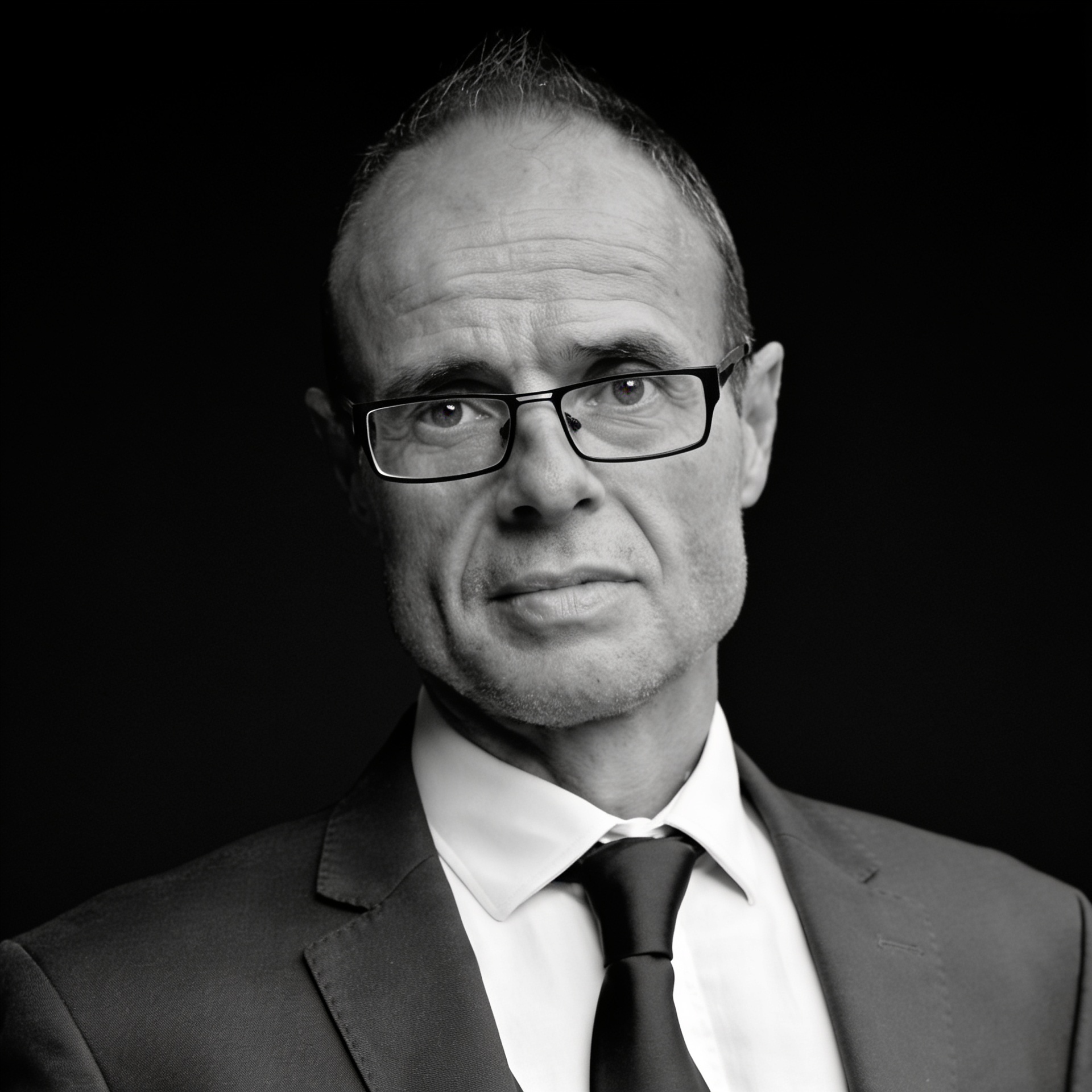
About Mike Mew
Mike Mew is the Pioneer of Orthotropics and the leading voice of a global movement built on a simple question his family has asked for three generations.
An educator and author, Mike Mew investigates how the human face grows and how the smallest daily habits (the way a tongue rests, the way breath moves, the way a jaw spends its hours) shape the face over a lifetime.
His work carries forward an inquiry his father, John Mew, began in the late 1960s. What began as one careful observer asking an unusual question has, over sixty years, grown into a worldwide community of students, educators, and self-directed learners.
He lectures internationally, teaches at the annual flagship event for the orthotropics movement, and continues to publish films, talks, and essays — all of which live, freely, in the library on this site.
"Study the work. Decide for yourself."
Biography
A life's inquiry into facial growth.
The Court Case
The Mew Case: Regulation, Evidence and the Limits of a Profession Judging Itself
A Preliminary Note
Before engaging with the substance of this case, one contextual fact deserves emphasis. Michael Mew has not, to date, provided a comprehensive written public account of his perspective on the proceedings. The narrative that emerges from the internet is therefore constructed almost entirely from regulatory documents, institutional press releases, and media reports written largely without technical sophistication or scientific literacy. Sensational framing has substituted for balanced analysis. What follows attempts to provide that analysis, drawing on the actual legal documents from both sides and the scientific questions they raised but largely failed to resolve.
What Actually Happened
In November 2024, following a 46-day disciplinary hearing and seven-year investigation by the General Dental Council, Dr Michael Mew, British orthodontist was erased from the dental register. His appeal to the High Court was dismissed in May 2026.
The charges centred on two things: claims made on his YouTube channel about the outcomes of his treatment, and the treatment he provided to two young patients, referred to throughout proceedings as Patient A and Patient B. Both children had, by every mainstream orthodontic metric, normal dental and skeletal development. The Professional Conduct Committee found that Mew had applied an unvalidated treatment protocol without adequate objective evidence, made unsubstantiated promises to parents about treatment outcomes (e.g. that "the treatment expands the brain" based on a video posted on YouTube in 2018), and fallen far short of the standards expected of a registered specialist. He was found to pose a risk to public safety and was erased with immediate effect, the committee concluding that his unwavering faith in his own treatment made meaningful reform within a suspension period unlikely.
That is the regulatory story. It is accurate as far as it goes. It does not go very far.
The Children and Their Parents
The media narrative implied, and the regulatory framing encouraged, a picture of a practitioner who had identified vulnerable children and subjected them to unnecessary, harmful treatment for experimental or ideological purposes. Reading the actual documents, a more complicated picture emerges.
Patient B's parents brought their child to Mew with genuine concerns about sleep. These were significant enough that Mew had considered preparing for intervention when the child was only two years old. Parents do not typically seek specialist opinions about two year olds without real worry. Patient A's mother remained a committed supporter of Mew's treatment throughout the proceedings, declined to cooperate with the GDC's records request, and gave evidence that was broadly sympathetic to him. She was described in documents as "a clear and ardent supporter." Patient B's parents, while ultimately filing the GDC complaint, notably declined to give evidence before the tribunal – a striking omission if they believed their child had been seriously harmed by a reckless practitioner.
Both families had sought Mew out. They came with concerns. In at least one case those concerns centred on breathing and sleep, precisely the domain where, as we shall see, the scientific questions Mew was raising were most legitimate. The regulatory framing treated the practitioner as the active agent and the families as passive recipients of whatever was done to them. The reality was families with real concerns seeking a practitioner willing to take those concerns seriously; and, in some cases because mainstream practitioners had told them nothing was wrong.
The Intellectual Foundation
Mew's lifetime practice was built on a premise, developed over decades, that modern human facial development is systematically compromised by environmental factors. Soft diets reducing masticatory load, mouth breathing altering growth vectors, open mouth posture removing the tongue's formative pressure from the developing palate, pacifier use, thumb sucking – all of these, he argued, produce a population-wide reduction in craniofacial development with consequences extending far beyond crooked teeth: compromised airway dimensions, sleep-disordered breathing, and downstream neurocognitive effects across a lifetime.
This is more scientifically grounded than media coverage suggested. Evolutionary biologists have documented extensively how pre-20th century human skulls consistently show broader arches, better-aligned dentitions, and erupted wisdom teeth without impaction in stark contrast to modern populations. The environmental influences on facial growth are acknowledged in mainstream anthropological, orthodontic and paediatric literature. The association between compromised upper airway dimensions, paediatric sleep-disordered breathing, and neurocognitive consequences including reduced attention, memory and academic performance is increasingly well-supported. Untreated paediatric obstructive sleep apnoea has documented associations with cardiovascular and metabolic consequences across a lifetime.
None of this is fringe science. Much of it would be unremarkable in a paediatric respiratory or ENT journal. The problem was not that Mew identified a real phenomenon. The problem was the chain of reasoning from that phenomenon to his specific diagnostic and treatment claims and the confidence with which he communicated conclusions within an orthodontic framework that the available evidence could not yet sustain.
The Shifted Baseline
Central to any honest assessment of this case is a problem the tribunal acknowledged superficially but never seriously engaged with: the definition of normal.
The GDC's case rested heavily on the finding that both patients had normal craniofacial development. Mew disputed this. Not because he denied their measurements fell within contemporary norms, but because he argued contemporary norms were themselves a corrupted baseline. If environmental compromise is systematic and population-wide, then the average modern child may represent not healthy development but universally suboptimal development, with the benchmark for genuinely healthy facial architecture residing in pre-industrial skeletal populations rather than contemporary dental school reference ranges.
This is not an absurd position. Consider that modern orthodontic textbooks define the normal adult dentition as 28 teeth. Biologically, humans possess 32 teeth including four third molars that evolved as functional components of a masticatory system. Wisdom tooth impaction, now so routine that surgical extraction is among the most commonly performed procedures in developed world healthcare, is essentially absent from pre-agricultural skeletal records. A profession that extracts billions of third molars annually because jaws have become too small to accommodate them, while simultaneously teaching that those small jaws represent normal development, is operating with a baseline that has quietly absorbed a population-wide pathology and reclassified it as unremarkable.
If the baseline is shifted, then diagnosing children as normal by reference to it is not scientific objectivity. It is the normalisation of compromise. The tribunal was never seriously confronted with this challenge. It accepted contemporary norms as the appropriate standard without examining whether those norms were themselves adequate.
The Tongue: The Structure Nobody Owns
Central to Mew's philosophy was the role of tongue posture as a primary modulator of healthy maxillary development. The tongue resting on the palate during waking hours exerts gentle but persistent hydraulic pressure that, during the period of sutural patency (most active before age five, largely complete by the mid-teens) shapes the maxillary arch from the inside. The lips closed anteriorly and the soft palate approximating the posterior pharyngeal wall create an integrated valving system that maintains nasal breathing and appropriate intraoral pressure. When nasal obstruction causes mouth breathing, this system fails: the tongue drops, removing its formative pressure from the palate, the arch narrows, nasal airway capacity reduces further, and the cycle reinforces itself. During sleep, the low-postured tongue unsupported by the negative pressure of a default suction hold falls into the airway, reducing calibre and predisposing to obstruction.
This functional account is physiologically coherent and increasingly supported by research across multiple disciplines. But it points to a profound structural gap in how healthcare is organised.
The tongue in a living human being – with full neuromuscular tone, postural reflexes and the dynamic interplay of breathing, swallowing, speaking and sleeping – belongs to no clinical specialty. Speech therapists address its role in articulation and swallowing. ENT surgeons encounter it in the context of obstruction and surgical intervention. Orthodontists – still quite grudgingly – observe the dental consequences of its postural failure. Sleep physicians measure its nocturnal consequences in patients with established pathology. Orofacial myofunctional therapists (the discipline perhaps closest to owning this space) remain largely unregulated, unevenly trained, and absent from mainstream healthcare pathways in most countries.
Crucially, none of these disciplines study the tongue as Mew was describing it: as a continuous postural and architectural force in a developing child, assessed in a living body with intact tone, during the window when its influence on craniofacial architecture is most active and most reversible. Anatomical training is cadaveric. A cadaver has no tone, no respiratory drive, no sleep architecture, no gravitational relationship with an upright body. The properties that make the tongue developmentally significant exist only in a living child. However, no specialty currently has the framework, the training, or the clinical pathway to assess them systematically.
Mew was attempting to occupy this no-man's land clinically. He was evaluated by practitioners whose training oriented them toward post-developmental dental mechanics. The mismatch was structural rather than incidental.
To supporters, the proceedings became a symbol of the tensions between professional orthodoxy and scientific dissent: an orthodontic inquisition that raised broader questions about innovation, evidence, and debate within the profession.
The Diagnostic Vacuum
Compounding this is a fundamental limitation that the tribunal failed to adequately address. The outcome that matters most in assessing craniofacial development, namely airway adequacy and its long-term health consequences, cannot easily be measured in young children within current ethical frameworks.
European radiation protection guidelines restrict diagnostic imaging in children to cases where clinical necessity clearly justifies the exposure. Comprehensive three-dimensional airway assessment requires CBCT scanning, which delivers considerable radiation dose, or MRI, which has practical limitations for routine use in young children. Polysomnography – the gold standard for sleep-disordered breathing assessment – requires established clinical indication before it is offered. Nasopharyngoscopy requires specialist ENT referral.
The result is a profound epistemic trap: the practitioners best positioned to identify early airway-relevant developmental compromise – orthodontists and dentists who see children during the developmental window – lack routine access to the diagnostic tools that would confirm or exclude it. Everyone is making clinical judgements about the most consequential variable in the field without adequate means of measuring it. Mew was criticised for relying on clinical observation and non-standardised assessment. So, in this domain, is everyone else because the alternative is either radiation exposure that ethical frameworks prohibit or specialist referral pathways that healthcare systems have not constructed for subclinical presentations.
The tribunal demanded adequate objective evidence. That demand was entirely reasonable as a professional standard. What it failed to acknowledge is that the ethical and practical constraints on imaging in children make generating that evidence extraordinarily difficult, and that the absence of RCT-level data in this area reflects the limitations of available methodology as much as the weakness of the underlying hypothesis.
The Harm Calculus Nobody Completed
The GDC's harm framework treated the risk from Mew's intervention as the primary variable, against a baseline of zero harm from non-intervention in children deemed normal. This framework was never seriously challenged. It should have been.
The realistic alternative for children presenting with parental concern about breathing, sleep and facial development is not a lifetime of untroubled health. It is conventional orthodontic treatment in adolescence, typically delivered after the developmental window has closed. That treatment, however technically proficient, moves teeth through bone without addressing skeletal architecture, and requires permanent mechanical retention as an implicit acknowledgement that underlying functional causes remain unaddressed. In the case of extraction and retraction mechanics (premolar extraction to create space, with subsequent retraction of anterior teeth) arch perimeter is permanently reduced, tongue space diminishes, and posterior airway dimensions may be compromised. The long-term airway consequences of conventional orthodontic treatment have received remarkably little research attention given the scale at which it is practised globally.
The tribunal measured the risks of Mew's intervention. It did not measure the risks of the alternative. The counterfactual: what happens to these children receiving conventional adolescent orthodontics, and what are the lifetime airway and health consequences was never examined. A complete harm calculus would require both sides of that comparison. The proceedings provided only one.
For patients requiring skeletal correction after the developmental window closes, the only remaining option is orthognathic surgery. That entails osteotomies performed under general anaesthesia, with weeks of recovery and risks of nerve damage, infection and relapse. This intervention is fully accepted, reimbursable and mainstream. The implicit logic of the profession is therefore: early appliance intervention in growing children is insufficiently evidenced, potentially harmful, professionally unacceptable. Surgical repositioning of adult jaws is mainstream, reimbursed, unremarkable. That hierarchy is difficult to defend on purely harm-based grounds.
What the Regulatory Process Can and Cannot Do
It is important to be precise about what the GDC proceedings established and what they did not.
The trial was a fitness to practise hearing, not a scientific inquiry. It was designed to evaluate whether Mew's specific conduct met the professional standards applicable to a registered specialist at the time of the relevant events. On that question, its findings are defensible. He applied aggressive and unique treatment mechanics to children without confirmed pathology. He made promises of skeletal transformation that the available evidence could not support. He diagnosed children using terminology ("craniofacial dystrophy") unrecognised in clinical framework. He failed to route concerns about sleep and breathing through appropriate specialist diagnostic pathways. When some adverse events occurred, he did not respond with adequate clinical caution. His own expert witness conceded his statements were too absolute, too sharp, and insufficiently caveated. Even on a generous reading of his underlying philosophy, the specific execution was professionally unjustifiable in important respects.
What the proceedings did not and could not establish is that his underlying concerns about craniofacial development were wrong, that early environmental intervention during the developmental window is without merit, or that mainstream orthodontic practice adequately addresses the health consequences of suboptimal facial development. A professional regulatory body judging a member of its own profession against its own current standards is structurally limited in its ability to interrogate those standards themselves. It cannot ask whether the baseline it has normalised is adequate. It cannot examine the harm its own mainstream practices may cause. It cannot evaluate the practitioner's ideas against a future evidence base that has not yet been produced. It can only ask whether he met the standards of his time, and on that narrow question, he did not.
The Broader Implication
Across the arc of this case, a more significant story emerges than the regulatory documents alone suggest.
Modern orthodontics has built an enormously sophisticated and profitable discipline largely around managing the consequences of what may be a population-wide developmental compromise – straightening crowded teeth, extracting impacted wisdom teeth, fitting braces to misaligned dentitions – while remaining institutionally incurious about why that compromise is so universal, and what its consequences are for the airway and the health systems that must eventually manage sleep-disordered breathing, cardiovascular disease, and cognitive decline in adults whose facial architecture was quietly determined in their first five years of life.
Critics described the trial as less a disciplinary hearing than an orthodontic event reflecting deeper divisions over the future direction of the field.
The tongue (perhaps the most consequential single structure in that developmental story) belongs to no specialty, is assessed by none systematically, and is studied almost exclusively in conditions that strip away precisely the properties that make it important.
The diagnostic tools needed to measure what actually matters (airway volume, nocturnal function, developmental trajectory) are ethically restricted precisely in the patients and the window where they would be most valuable.
The evidence standard applied to early intervention is one that the nature of the problem makes structurally impossible to satisfy, while the alternative treatment pathway is held to no equivalent standard regarding its long-term airway consequences.
Mew identified these gaps. He identified them early, argued for them passionately, communicated about them with a certainty the evidence did not yet justify, and applied treatments whose specific claims outran what he could demonstrate. He was, in the regulatory sense, correctly found wanting.
But the questions he was asking were the right ones. The discipline that judged him has not yet seriously begun to answer them. And the children whose facial development is incessantly compromised during the years when it could most easily be protected will continue to bear the consequences of that institutional incuriosity. Not in their dental alignment, which orthodontics can address, but in their airways, their sleep, and the long downstream cascade of health consequences that flow from a developmental window that nobody, in any organised clinical sense, is currently watching.
That is the real significance of the Mew case. Not a maverick rebel brought to justice, but a profession revealed – by the very proceedings it brought against one of its own – to be answering the wrong question, by the wrong measure, at the wrong point in a child's life.
John Flutter questions Mike Mew about the Trial
What's next
The work continues. New films. New essays. A growing community carrying the question into a new generation. The face is built, not born — and a generation of careful observers is still asking what that means.